
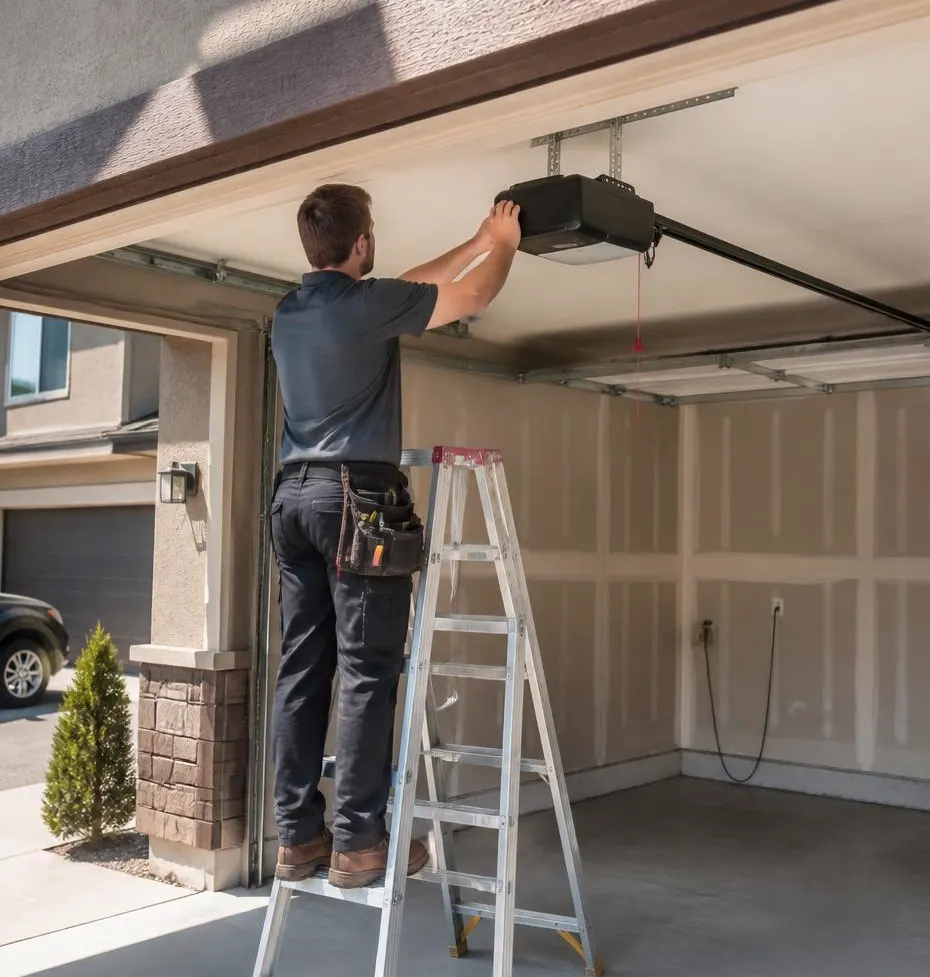
You hit the remote on your way out the door before sunrise, coffee in one hand, keys in the other — and instead of the usual quiet hum, the door grinds, squeals, pops, or rattles its way open. You freeze for a second, listening, trying to decide if this is a "deal with it later" noise or a "don't use this door again" noise. The good news: the sound itself is a diagnostic tool. Technicians listen to garage doors the way mechanics listen to engines, and each noise points toward a specific set of causes, checked in a specific order.
Grinding: Something Is Scraping Metal on Metal
Grinding is a low, rhythmic scraping sound that usually tracks with the door's movement — louder as it passes certain points along the track. It's rarely subtle, and it tends to get worse week over week rather than appearing once and going away.
- Worn rollers first. Nylon rollers wear down over years of use, and steel rollers near the coast can dry out or develop surface rust from salt air, losing their smooth roll and starting to scrape instead. A tech checks roller condition before anything else because it's the most common cause and the easiest fix.
- Bent or misaligned track next. If rollers look fine, the track itself may have shifted slightly — from age, a bump, or humidity-driven swelling in the surrounding frame. A bent section forces rollers to scrape against the track wall instead of rolling freely through it.
- Failed roller bearings last. If the roller spins but still grinds, the bearing inside has likely seized or corroded, which is common once salt air gets into unsealed metal parts.
The fix is usually roller replacement (nylon rollers run quieter and hold up better in humid, salty air than steel) or a track realignment where a technician repositions the track and re-secures the brackets.
Squealing: Something Needs Lubrication or Is Wearing on a Spring
Squealing is a higher-pitched screech, often loudest right when the door starts moving, then fading as it gets going.
- Dry hinges, rollers, and track first. This is the most common cause by far, especially after a stretch of heavy rain or high humidity that washes lubricant off moving parts. A quick check of hinge pivots and roller stems usually confirms it.
- Torsion spring wear next. Springs that coil and uncoil thousands of times a year will dry out and squeal as the coils rub against each other, particularly once factory lubrication has broken down.
- Worn spring or pulley bearings last. If lubrication doesn't quiet things down, the bearing plates supporting the spring shaft may be worn and need replacement.
The fix for most squealing is a proper lubrication pass with a silicone-based garage door lubricant — not household oil or WD-40, which attract dust and grit and make the problem worse over time. If the spring itself is the issue, that's a job for a technician, since torsion springs are under heavy tension and dangerous to service without the right tools.
Popping: Hardware, Panels, or a Spring Under Stress
Popping is a single loud bang or a sharp crack, sometimes happening mid-cycle, sometimes when the door is just sitting still during a temperature swing.
- Loose hardware first. Hinges connecting panels, and the bolts holding brackets to the door, loosen gradually from daily vibration. A loose hinge flexing under load makes a distinct pop as the door moves.
- Panel flex next. Afternoon heat followed by sudden downpours causes repeated expansion and contraction in door panels, and older wood or composite doors can swell slightly with humidity, popping as they settle back into shape.
- Spring or cable stress last. A single loud pop that doesn't repeat, especially paired with the door feeling heavier or uneven, can mean a spring coil shifting under tension or a cable starting to fray. This is the one to stop using the door over and call about.
Fixes range from simply tightening hardware, to replacing a warped panel section, to a full spring inspection and repair if tension is the cause.
Rattling: Loose Parts Working Themselves Looser
Rattling is a looser, shakier sound — hardware that sounds like it's vibrating rather than scraping or cracking, often worse on windy days.
- Loose fasteners first. Track brackets and hinge bolts back out over time, and salt air speeds up corrosion that makes this worse along the coast.
- Loose rollers in the track next. A roller stem with too much play rattles as it rides through the track.
- Opener chain or belt tension last. A chain-drive opener with a slack chain will rattle during operation, which is usually an easy tension adjustment.
Rattling hardware deserves attention before storm season specifically — loose brackets and fasteners undermine a door's wind-load rating, which matters a great deal once tropical weather rolls through the Keys.
When to Call Marathon Garage Door Service
If lubrication and a hardware check-over don't quiet things down, or if you hear a single loud pop and the door starts feeling uneven, it's time to call. Our Garage Door Maintenance visits cover the full lineup above — lubrication, hardware tightening, track alignment, and roller inspection — and catch small issues before they become a stuck door. If the noise traces back to a spring, we handle that through dedicated Garage Door Spring Repair rather than a quick fix, since springs need to be replaced under controlled tension by someone trained to do it safely.
If your garage door has started making noise it didn't used to make, give Marathon Garage Door Service a call. We serve Marathon, Key Colony Beach, Duck Key, Grassy Key, Big Pine Key, Islamorada, Tavernier, and Key Largo, and we'll track down exactly what's wrong before storm season puts it to the test.