
The Assumption That Starts the Argument
Here's the mistake almost everyone makes first: assuming a commercial overhead door is just a residential garage door scaled up. It's an easy trap to fall into. Both are big metal panels on a track, both roll up and down, both use springs and an opener. If you've lived with a house garage door for years, it's tempting to think the same rules, the same maintenance schedule, and the same repair tricks just apply at a bigger size. The logic feels sound. It's also wrong, and the gap between the two is bigger than most people expect.
Why They're Built Differently
A residential garage door on a house in the Keys typically opens and closes a handful of times a day. A commercial or warehouse door, especially one on a loading dock or a business with regular deliveries, can cycle dozens of times in a single shift. That difference in use changes everything about how the door is engineered.
- Springs and counterbalance: Commercial doors often use heavier-duty torsion springs, sometimes multiple springs or a counterweight system, rated for tens of thousands of cycles instead of thousands. A homeowner's spring kit isn't built for that kind of daily workload.
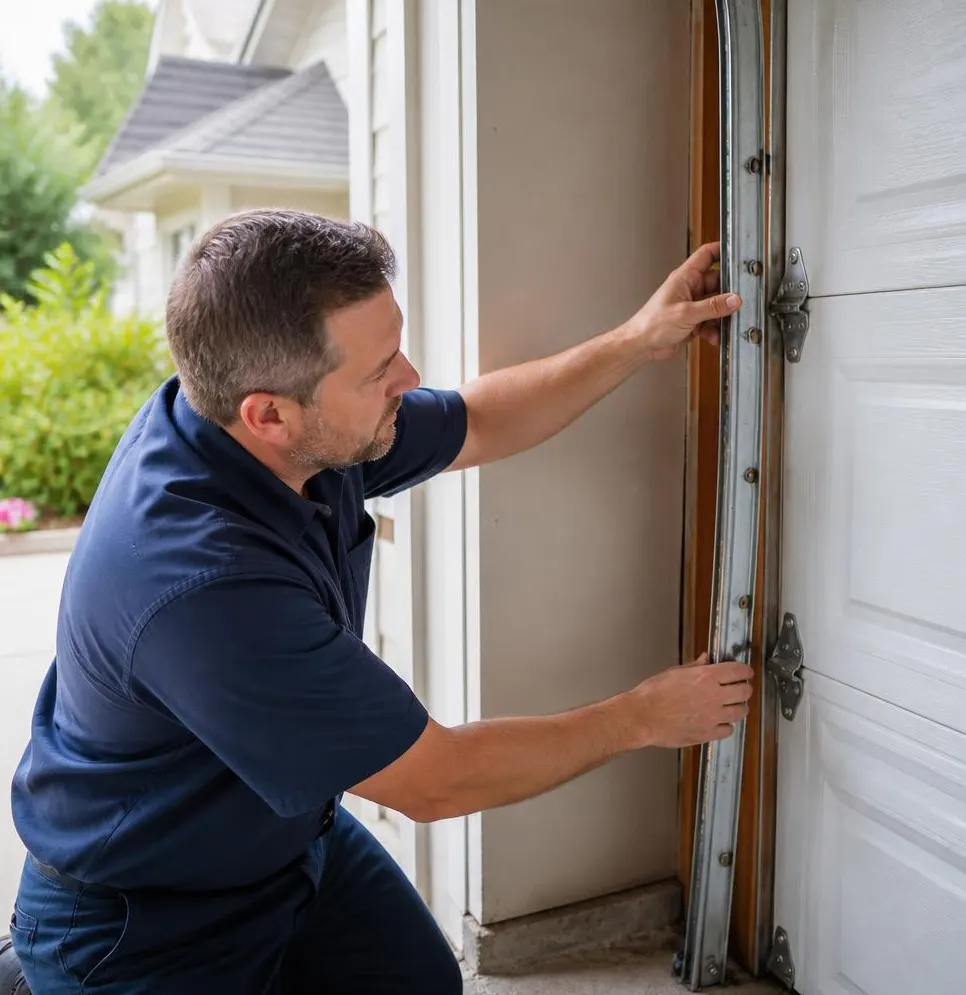
- Track and hardware: Commercial doors are heavier, so the tracks, hinges, and rollers are thicker gauge steel to handle the extra weight and the repeated stress of frequent openings.
- Opener motors: A residential opener is designed for occasional use. Commercial-grade operators have a higher duty cycle rating so they can run repeatedly without overheating or burning out.
- Materials and insulation: Some warehouse doors prioritize durability and airflow over insulation, while others need climate control for stored goods. The right choice depends on what's happening inside the building, not just the size of the opening.
The Maintenance Gap Nobody Talks About
Because commercial doors work harder, they also need more frequent attention than a once-or-twice-a-year check. A door that opens 40 times a day wears out its rollers, cables, and hinges faster than one that opens twice. In a coastal climate, that wear gets compounded by salt air, which speeds up corrosion on steel hardware, especially hinges, track bolts, and spring coils that aren't sealed or treated for it.
Add in the heat, humidity, and afternoon downpours that are routine here, and you get moisture working into joints and fasteners even on doors that look fine from the outside. On a residential door, that might mean a little surface rust. On a heavily-used commercial door, it can mean a cable fraying faster than expected or a roller seizing up under load, which is a bigger problem when the door is cycling constantly.
What a Realistic Commercial Maintenance Routine Looks Like
- Inspect springs, cables, and rollers more often than the typical homeowner schedule, since high-cycle use accelerates wear.
- Check all hardware for corrosion, particularly anything exposed to salt air near the coast, and address rust before it compromises strength.
- Test safety sensors and reversing mechanisms regularly, since high-traffic doors see more opportunities for something to get in the way.
- Before hurricane season, confirm the door meets wind-load requirements for its size. A larger door has more surface area catching wind, so the engineering margin matters even more than it does on a house door.
Settling the Debate
So if you're arguing over whether the business door down the road can be treated like the one on your house: it can't, not really. The core idea, a panel on a track with a counterbalance system, is the same. But the cycle count, the hardware weight, the spring engineering, and the maintenance rhythm are built for completely different workloads. Treating a commercial door like a residential one usually just means it fails sooner, often at the worst possible time, like mid-storm or mid-delivery.
When to Call Marathon Garage Door Service
If you're dealing with a commercial or warehouse door that's cycling roughly, grinding, or showing rust on the hardware, that's worth a professional look before it becomes a stuck door during business hours. Marathon Garage Door Service handles both Cable & Roller Replacement and Garage Door Maintenance for high-use doors, checking the parts that wear out fastest under heavy cycling and salt exposure, and catching corrosion or fraying before it turns into a shutdown.
Whether it's a house door in Marathon or a loading dock door in Key Largo, give Marathon Garage Door Service a call to get it inspected, maintained, and ready for whatever the season brings.