
The Short Answer
When the power goes out, pull the red emergency release cord hanging from your opener's trolley to disconnect the door from the motor. This lets you lift and lower the door by hand, like any manual door. Once power is restored, you reconnect the trolley by pulling the cord again (or flipping the release lever) and running the opener through one full cycle to make sure it's tracking properly before you trust it again.
That's the basic move. Here's how to do it safely, what tools help, and where the line sits between a homeowner task and a technician's job — which matters more here than in most places, because salt air, humidity, and storm season all affect how a garage door behaves when it's running on muscle power instead of a motor.
Tools You'll Need
- A step stool, if your release cord or manual lock is out of easy reach
- Work gloves, since tracks and hardware near the coast often have surface rust or grit
- A flashlight or headlamp for outages at night
- Your key, if the door has an exterior manual lock or slide bolt
No power tools are required for manual operation. If you find yourself reaching for a wrench or pry bar to force the door to move, stop — that's a sign something beyond the power outage is wrong.
Step-by-Step: Opening the Door Manually
- Locate the emergency release cord. It's usually a red handle hanging from a track on the ceiling, near the opener unit.
- Pull the cord down and toward the back of the garage. This disconnects the trolley from the drive carriage, freeing the door from the motor.
- Lift the door slowly, using both hands spread across the bottom panel. A properly balanced door should feel relatively light and should stay partway open on its own if you let go. If it feels heavy, drops suddenly, or won't stay up, stop and do not force it further — this points to a spring or cable problem, not just a power issue.
- Prop the door open if you need it to stay up, using a clamp or locking pliers on the track just below a roller, so it can't slide back down while you're loading a car or moving storm supplies in and out.
Step-by-Step: Closing and Securing the Door
- Lower the door by hand, keeping it centered so it doesn't bind sideways in the tracks. Humidity and condensation can cause tracks to swell slightly or rollers to stick, so go slow and watch for resistance.
- Make sure it seats fully against the floor — a door that's even an inch off the ground won't keep wind-driven rain out, and during storm season that gap is exactly how water and debris get in.
- Engage the manual lock or slide bolt if your door has one. With the opener disconnected, the door isn't held closed by the motor anymore, and a closed-but-unlocked door can be pushed open by hand or by strong wind.
- If a storm with high winds is approaching while the power is out, this manual lock matters even more — garage doors in the Keys are built and installed to hold up against wind load when fully engaged, but that protection depends on the door actually being locked shut, not just resting closed.
Re-Engaging the Opener After Power Returns
- Make sure the door is fully closed before reconnecting, so the trolley and carriage line up correctly.
- Pull the release cord again, or move the manual release lever, to reconnect the trolley to the drive mechanism. You'll usually feel or hear it click into place.
- Press the wall button or remote to run the door through one full open-and-close cycle while you watch it. It should move smoothly, without jerking, grinding, or stopping partway.
- Test the auto-reverse safety feature by placing a block of wood flat on the ground in the door's path and closing it. The door should reverse immediately on contact. If it doesn't reverse, leave the door disconnected and don't run it on the opener again until it's checked.
What a Homeowner Can Handle vs. What Needs a Technician
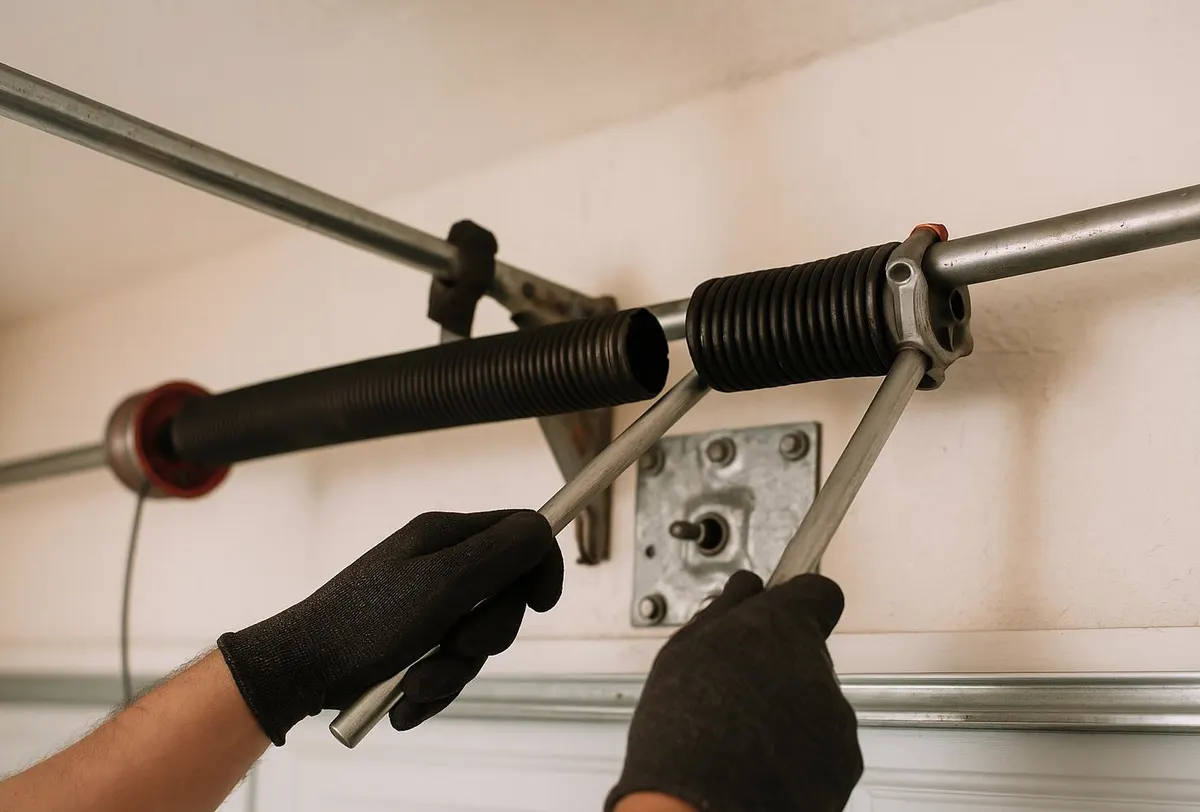
Pulling the release cord, manually opening and closing the door, and reconnecting the opener are all safe, normal homeowner tasks. What's not a DIY job: a door that feels unusually heavy, drops on its own, binds hard partway through its travel, or won't reverse during the safety test. Those point to spring tension, cable, track, or roller problems — the kind of wear that shows up faster here thanks to salt air corrosion and moisture swelling wood or metal components. Springs under tension are also genuinely dangerous to adjust without the right tools, so that one is never a homeowner fix.
When to Call Marathon Garage Door Service
If your door won't stay balanced when lifted by hand, the auto-reverse test fails after power returns, or you're hearing new grinding or scraping from the rollers and track, it's time to call us. We'll check spring tension, inspect cables and rollers for salt-related wear, and handle Cable & Roller Replacement or Garage Door Spring Repair so your door is reliable before the next outage or storm rolls through. If the opener itself won't reconnect properly or keeps losing its programming after power blips, Garage Door Opener Installation with a newer, more storm-tolerant unit may be the better long-term fix.
If your garage door isn't behaving the way it should after an outage, give Marathon Garage Door Service a call — we serve Marathon, Key Colony Beach, Duck Key, Grassy Key, Big Pine Key, Islamorada, Tavernier, and Key Largo, and we'll get it moving safely again.