
The short answer
Once a season, grab a flashlight and a few basic tools, spend twenty minutes looking, listening, tightening, and lubricating your garage door, and you'll catch most of the problems before they strand you with a door that won't open. Late November is a good time to run it: hurricane season is winding down, the door has been working hard against wind, humidity, and salt air for months, and the drier weeks ahead are the easiest time to get ahead of rust and swelling before next season's storms.
Tools you'll need
- Work gloves and a flashlight
- A socket wrench or screwdriver set
- Silicone-based garage door lubricant (not WD-40, which attracts grit)
- A soft brush or rag
- A step ladder
- A scrap piece of wood or a full roll of paper towels
The 20-minute routine
- Look at the tracks. Run your flashlight along both vertical and horizontal tracks. In coastal air, surface rust and small dents from storm debris show up fast. Light surface rust can be wiped down; flaking rust or a track that's visibly bent needs a technician.
- Tighten visible hardware. With the door closed, go over the bolts holding the tracks and brackets to the frame with a wrench. Humidity and vibration work screws loose over a season. Snug them, don't force them.
- Clean the tracks. Wipe out salt residue, sand, and dust with a dry rag. A clean track reduces the grinding wear that eventually chews up rollers.
- Inspect rollers and hinges. Look for cracked rollers, rust at the hinge pins, or play where metal meets metal. Minor wear is normal; a roller that's chipped or a hinge that wiggles loosely is a sign cable and roller replacement is coming up.
- Lubricate the moving parts. Spray silicone lubricant on hinges, roller bearings, and the track itself (a light coat, not a soaking). This is especially important here, since salt air speeds up corrosion on anything left dry.
- Check the bottom seal. Look at the rubber weatherstripping along the bottom of the door for cracks, gaps, or spots where it's pulled away. A failed seal lets afternoon downpour water and humidity into the garage, which leads to swelling on wood doors and rust on steel hardware.
- Test the auto-reverse safety feature. Place a roll of paper towels on the ground where the door closes. Close the door with the opener. It should reverse the moment it touches the roll. If it doesn't, stop using the opener until it's serviced.
- Check the balance. Disconnect the opener (pull the release cord) and lift the door halfway by hand. It should stay in place on its own. If it falls or shoots up, the springs are out of balance.
What's safe for a homeowner, and what isn't
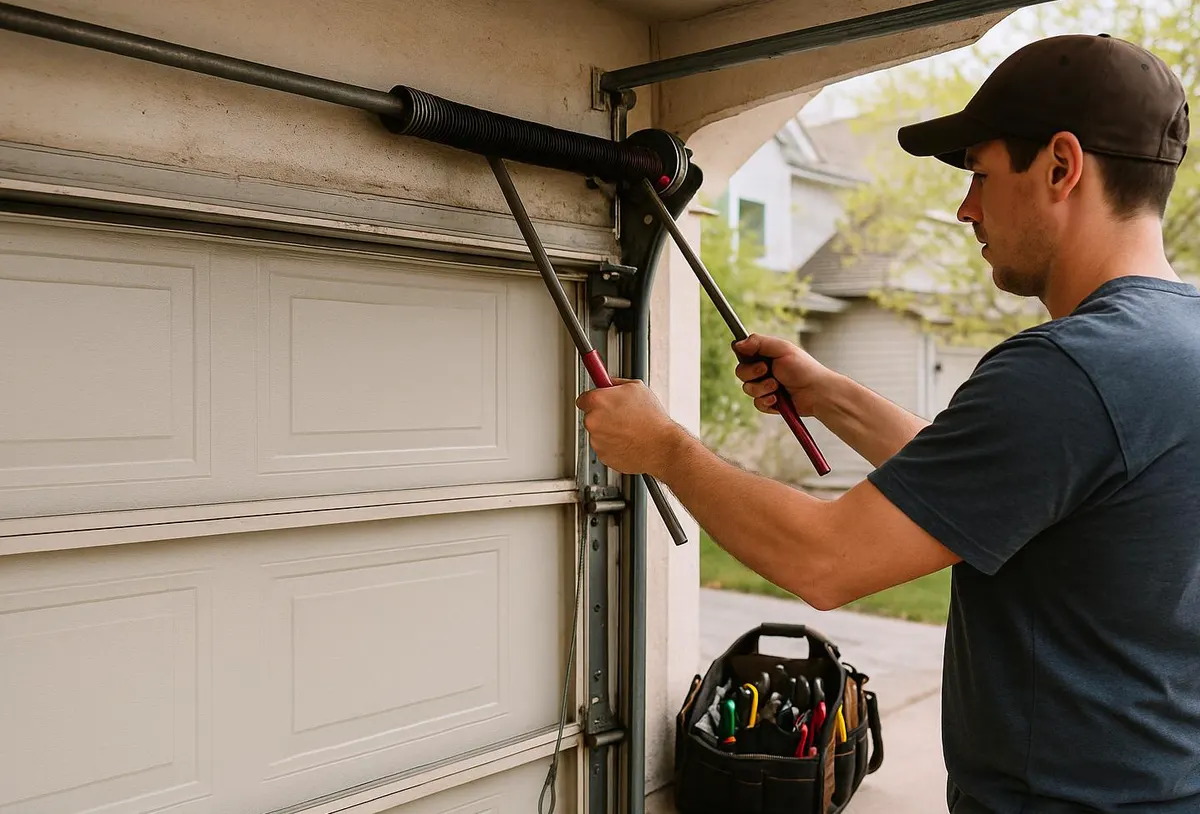
Everything above — visual checks, cleaning, lubricating, tightening visible bolts, and testing the auto-reverse and balance — is safe to do yourself with the door closed and the opener disconnected. What's not a DIY job: anything involving the torsion or extension springs, the lift cables, or a door that's come off track. These parts are under heavy tension and a mistake can cause serious injury. If your balance test shows a problem, or you see frayed cable strands, a stretched or rusted spring, or a track that's visibly bent, that's where the routine ends and a call to a technician begins.
When to call Marathon Garage Door Service
If your twenty-minute check turns up a spring that looks worn or stretched, cables with visible fraying, or a door that's noticeably out of balance, that's our job, not yours. We handle Garage Door Spring Repair and Cable & Roller Replacement safely, with the right tools to release tension before anything is touched. We can also run a full Garage Door Maintenance visit if you'd rather have someone else do the whole twenty minutes for you, plus check the opener's force settings and give the hardware a proper once-over for salt-air corrosion.
If your seasonal check turns up more than you want to handle, call Marathon Garage Door Service. We serve Marathon, Key Colony Beach, Duck Key, Grassy Key, Big Pine Key, Islamorada, Tavernier, and Key Largo, and we'll have a technician out to get it right before the next storm rolls through.